
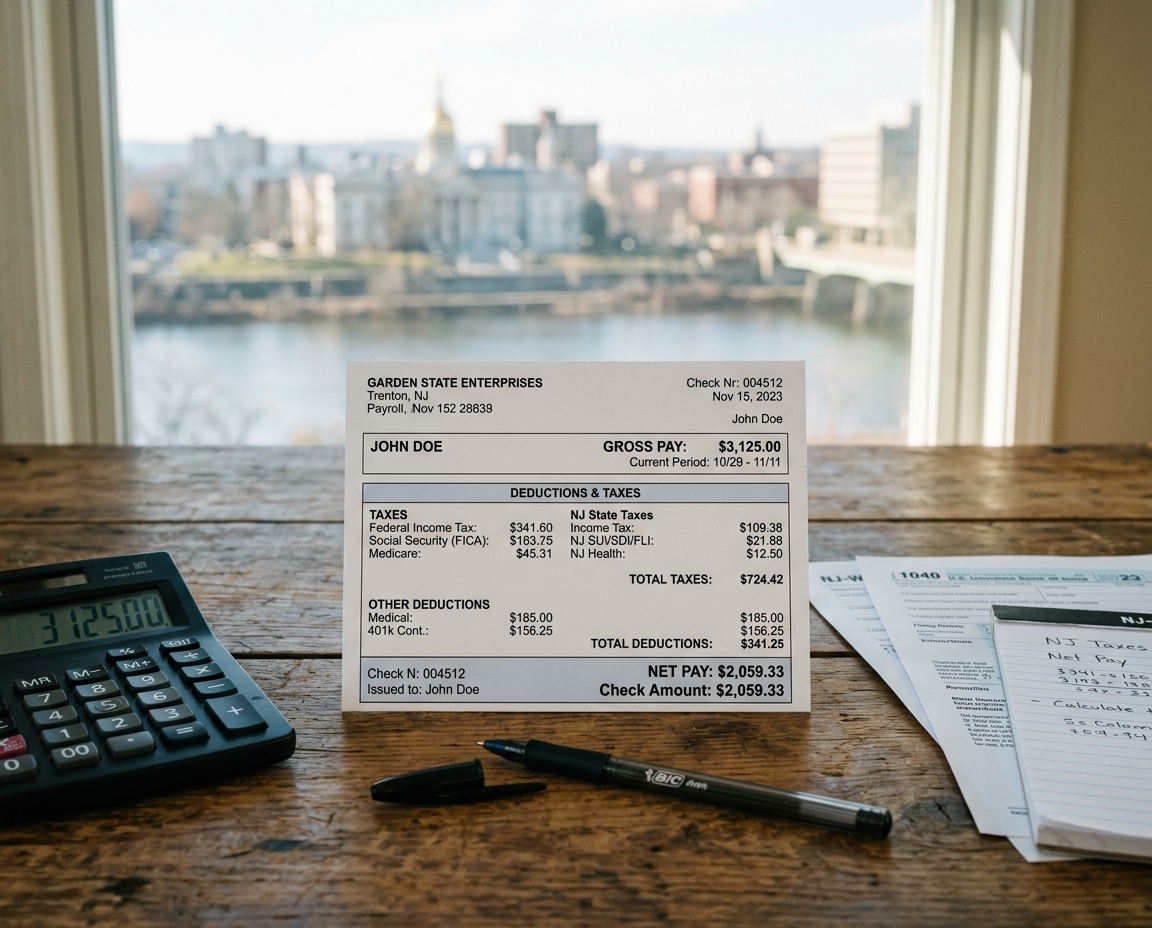
Managing personal finances often feels like navigating a complex maze, especially when new government policies shift the landscape.
Many workers may feel uncertain as they look ahead to their future earnings and wonder how new adjustments will affect their take-home pay.
Understanding the latest tax rule changes is essential for every household. These updates are designed to provide relief, yet they often create confusion regarding what appears on a monthly pay stub.

In 2026, the standard deduction will increase, which effectively lowers the portion of income subject to federal income tax.
Additionally, families with qualifying children may benefit from a larger child credit. While payroll systems now use updated withholding tables, remember that fluctuations in employee paychecks do not always signal a change in a final annual bill for 2026 taxes.
Key Takeaways
- The standard deduction has increased to lower taxable income for many workers.
- Families may benefit from a larger child credit under the new guidelines.
- Updated withholding tables are now integrated into payroll systems across the country.
- Changes to your take-home pay do not necessarily reflect your total annual liability.
- Staying informed helps employees better manage their household budgets throughout the year.
How 2026 taxes may change employee paychecks
Employees across the United States should prepare for adjustments to their take-home pay as new tax regulations take effect in 2026.
These policy shifts are designed to change how much money is withheld from earnings throughout the year. Understanding these changes helps workers plan their budgets with greater confidence.
Higher standard deduction reduces the income subject to federal tax
The government has increased the standard deduction for the upcoming tax year. This adjustment means more of your annual earnings remain free from federal income tax.
By raising this threshold, the tax code effectively reduces the total income considered taxable for most individuals.
As a result, many workers may see a slight increase in their net pay because less money goes toward taxes.
Larger child tax credit may benefit qualifying families
Families with children will find more support through an expanded child tax credit. This credit is specifically designed to reduce the overall tax burden for households that meet certain eligibility requirements.
- Increased credit amounts per qualifying child.
- Expanded eligibility criteria for middle-income families.
- Direct impact on reducing annual tax liability.
These updates provide meaningful relief for parents managing household expenses. When families qualify, they keep more of their hard-earned money, which helps stabilize their financial situation throughout the year.
Updated federal withholding tables change paycheck deductions
Employers must adjust their payroll systems to reflect new withholding tables provided by the IRS. These tables dictate how much federal withholding is taken from each paycheck to cover anticipated tax obligations.
Because these tables change, your regular paycheck deductions might look different starting in 2026. Workers often see fluctuations in their net pay as employers align their systems with the latest government guidance.
Why withholding changes may not match a worker’s final tax bill
Remember that withholding is only an estimate of your total tax liability. The amount taken from your pay is an advance payment, not the final tax amount you owe.
When you file your tax return, your total annual income and specific credits determine the tax due. If too much or too little was withheld during the year, you settle the difference through a refund or an additional payment at tax time.
Federal payroll taxes and New Jersey paycheck deductions
Beyond federal mandates, New Jersey residents face state-level payroll taxes that affect their take-home pay.
While federal contributions are uniform nationwide, state-specific requirements add another layer to your financial planning.
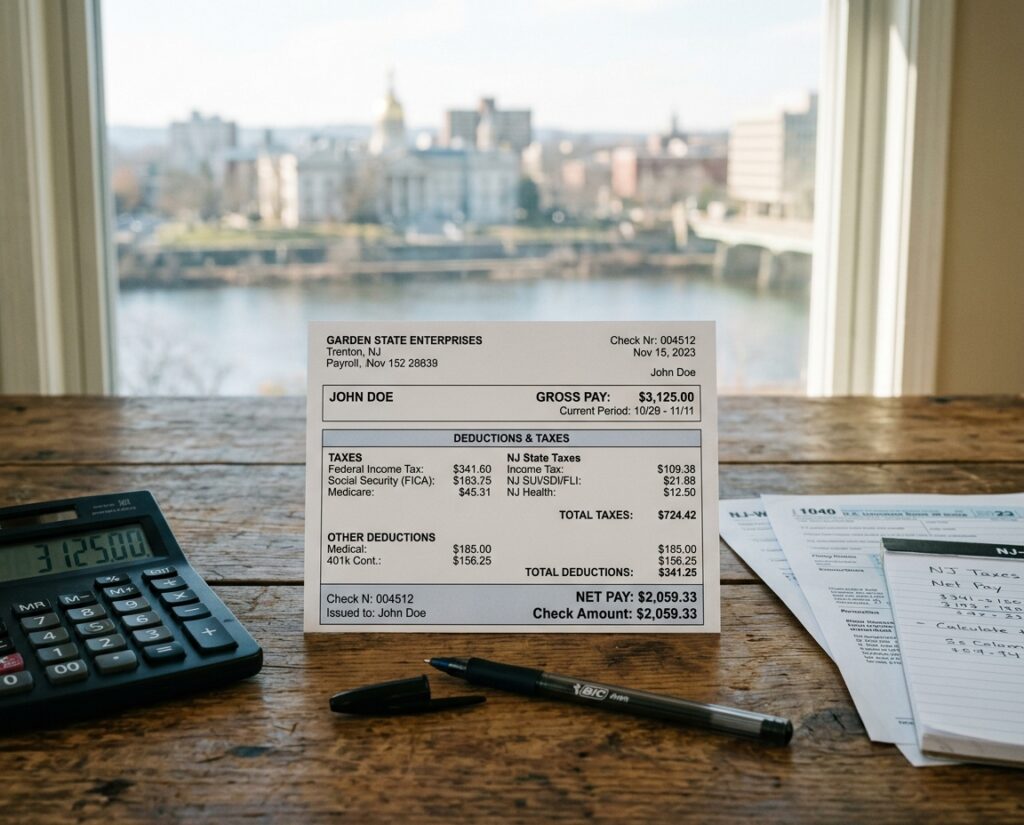
Social Security tax applies at 6.2% on wages up to $184,500
The federal government requires employees to pay a Social Security tax of 6.2%. This contribution is calculated based on gross earnings up to a specific cap. For the 2026 tax year, the limit is $184,500.
Medicare tax remains 1.45% on all wages
Unlike Social Security, the Medicare tax has no income ceiling. Employees must contribute 1.45% of their total gross wages toward this program regardless of how much they earn annually.
New Jersey workers fund temporary disability and family leave programs
Garden State residents contribute to state-run insurance funds that provide essential safety nets.
These New Jersey paycheck deductions support temporary disability and family leave programs, ensuring workers have income protection during difficult times.
Higher 2026 New Jersey wage limits can affect state payroll deductions
State authorities often adjust wage limits to keep pace with economic changes. In 2026, these higher thresholds mean that a larger portion of an employee’s income may be subject to state-level payroll contributions.
How payroll deductions support retirement, disability, health and leave benefits
These mandatory contributions serve as a vital investment in your future security. By funding these programs, workers gain access to retirement income, medical coverage, and paid time off for family emergencies.
| Tax/Contribution Type | 2026 Rate | Wage Limit |
|---|---|---|
| Social Security | 6.2% | $184,500 |
| Medicare | 1.45% | No Limit |
| NJ Disability/Leave | State-Defined | Adjusted Annually |
Conclusion
Navigating the shifting landscape of taxes require a clear understanding of how federal and state policies impact take-home pay.
Adjustments to the standard deduction and child tax credit will play a significant role in shaping employee paychecks throughout the coming year.
Workers should monitor updated withholding tables to anticipate changes in their net income. While paycheck deductions often feel like a burden, these contributions serve a vital purpose for long-term security.
The 6.2% Social Security tax on wages up to $184,500 and the 1.45% Medicare tax remain essential pillars of the national safety net.
New Jersey residents contribute to state-specific programs that provide critical support during life transitions. These mandatory withholdings fund retirement, disability, and health benefits that protect individuals when they need them most.
Understanding these allocations helps employees see the value behind every dollar removed from their gross earnings.
Staying informed about these fiscal updates empowers workers to manage their household budgets with confidence. Proactive planning helps families stay prepared for an evolving economic environment.
Readers are encouraged to review their pay stubs regularly to track how these adjustments influence their personal financial goals.
FAQ
How does the higher standard deduction in 2026 affect federal income tax?
The Internal Revenue Service (IRS) has implemented a higher standard deduction for 2026, which reduces the specific portion of an individual’s earnings subject to federal income tax. By lowering the taxable income, many employees may see a reduction in their overall tax liability, allowing them to retain a larger portion of their gross earnings.
What impact do the updated 2026 federal withholding tables have on take-home pay?
Payroll departments utilize updated federal withholding tables to determine how much tax to remove from each paycheck. While these adjustments aim to align withholding amounts with current laws, they function as an advance payment calculation.
As a result, the total tax withheld during the year may not match the final annual tax bill calculated when the worker files their return.
How does the 2026 child tax credit benefit qualifying families?
Families with qualifying children may be eligible for a larger child tax credit under the 2026 rules. This adjustment is designed to lower the federal tax burden for households, potentially increasing the net pay received in each pay period if withholding is adjusted accordingly.
What are the Social Security tax rates and wage limits for 2026?
For the 2026 calendar year, the Social Security tax is set at a rate of 6.2%. This deduction applies to employee wages up to a maximum wage base limit of 4,500. Earnings exceeding this threshold are not subject to the Social Security payroll deduction.
Is there a cap on Medicare tax deductions?
Unlike Social Security, the Medicare tax does not have a wage limit. It remains at a consistent 1.45% on all wages earned. These contributions are mandatory and are used by the federal government to fund national health programs and disability benefits.
What state-specific deductions apply to New Jersey workers in 2026?
In addition to federal taxes, New Jersey employees are required to contribute to state-managed programs such as temporary disability and family leave insurance. The New Jersey Department of Labor and Workforce Development has set higher wage limits for 2026, which may change the amount of state payroll deductions taken from a worker’s paycheck.
Why are payroll deductions necessary if they reduce immediate income?
While payroll deductions decrease immediate take-home pay, they serve as a critical funding source for retirement, disability, and leave benefits. These programs ensure that workers have access to financial support and health services when they reach retirement age or encounter qualifying life events, such as a personal illness or the need to care for a family member.